Peptides, aging and elapsed time
Waiting for the long in Longevity Aminos
A hormone peaks in minutes. Trials end after weeks or months. The years borrowed by longevity claims are what I’m waiting to see measured.
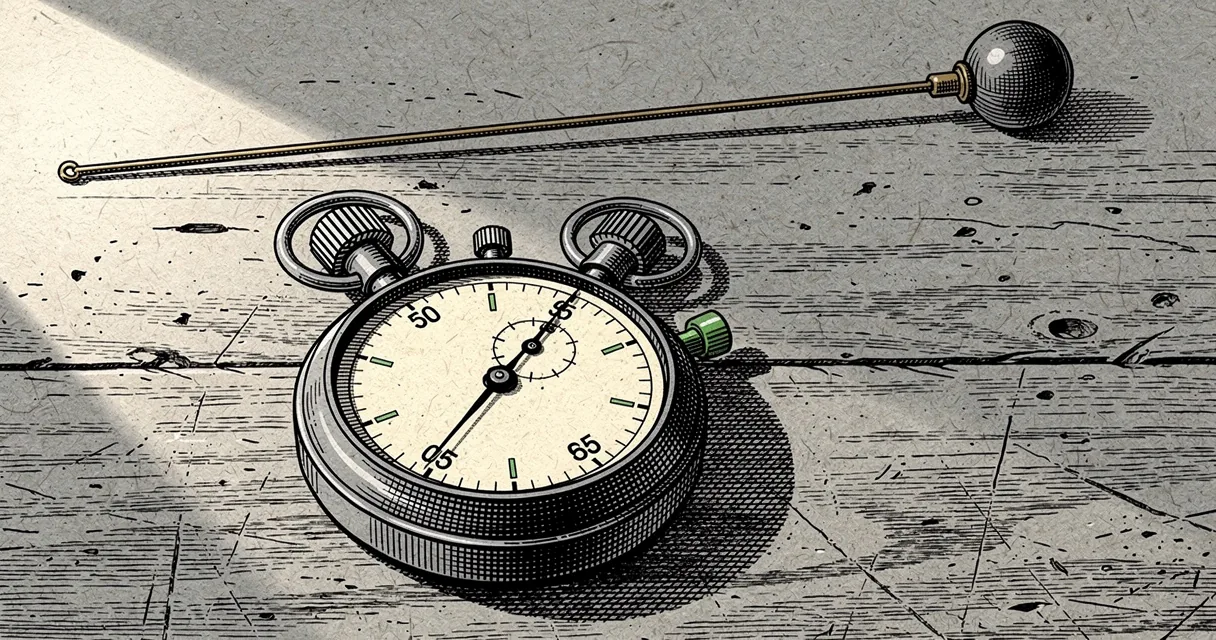
Timing a hormone response
In a 1999 study, healthy men received ipamorelin through a vein and researchers watched their blood. Growth hormone rose in a single pulse, peaking at about 40 minutes. Ipamorelin itself had a terminal half-life of approximately 2 hours. The experiment captured a brief biological event with unusual clarity.
A stopwatch feels like the right instrument for that result. Then I reach the word longevity and the scale changes completely. A hormone response can happen during an afternoon; a claim about healthier later life asks for a much longer account of what followed. This particular study established the pulse and the drug’s movement through blood. It left the later health story unwritten.
Ipamorelin’s next clinical question was strikingly practical: after bowel surgery, could people tolerate a meal sooner? That trial missed its primary endpoint. A fast response and a useful recovery turned out to be separate questions.
Weeks of NAD+ precursor trials
The NAD+ papers move at another pace. In a 60-day NMN trial in middle-aged adults, blood NAD+ rose and walking distance improved compared with placebo. Here something people could do changed alongside a laboratory measure. I’d give that walking test a longer look than another blood measurement.
NMN supplies material for making NAD+; NR does too. These trials tested particular oral ingredients. NAD+ itself is a coenzyme used in energy metabolism and repair, rather than a chain of amino acids. The NAD+ page follows the different trial durations and the different outcomes, including results that stayed unchanged.
Skin experiments and muscle tests
A skin penetration experiment ran for 48 hours. It tracked copper applied as GHK-Cu in removed human skin. A hair trial lasted 6 months and tested a mixture containing plain GHK. Those are two quite different kinds of time spent with an ingredient. The GHK-Cu story needs both the formulation and the clock.
MOTS-c research brings in age itself: treated old mice performed better in running, grip and gait tests. Preserving ability is a concrete aging question. The published human findings here follow existing blood levels, while the treatment gains come from animals.
Human lifespan
None of these studies demonstrated that treating people added years to their lives. Even a longer study would need to measure the relevant health outcome; simply leaving the calendar running would settle very little. A 2025 review of human NAD+ precursor research found limited efficacy and sparse information about NAD+ inside specific tissues.
The results with a clear beginning and end have the strongest appeal: a measured pulse, a walking test, a particular skin change. The large claim can wait. There is already plenty to investigate in the durations and outcomes of these studies, and in the full reading list.